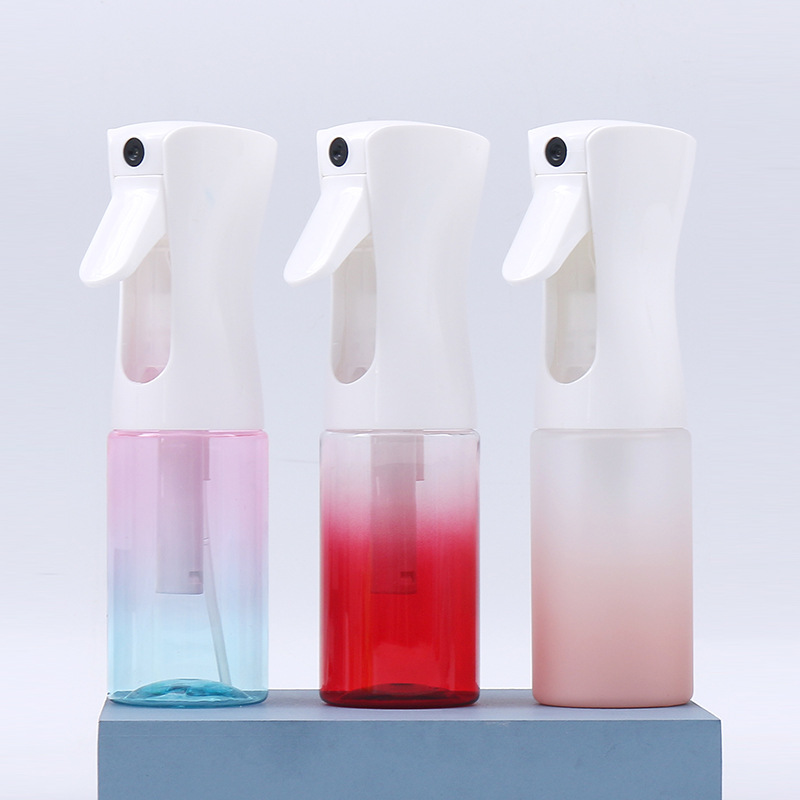
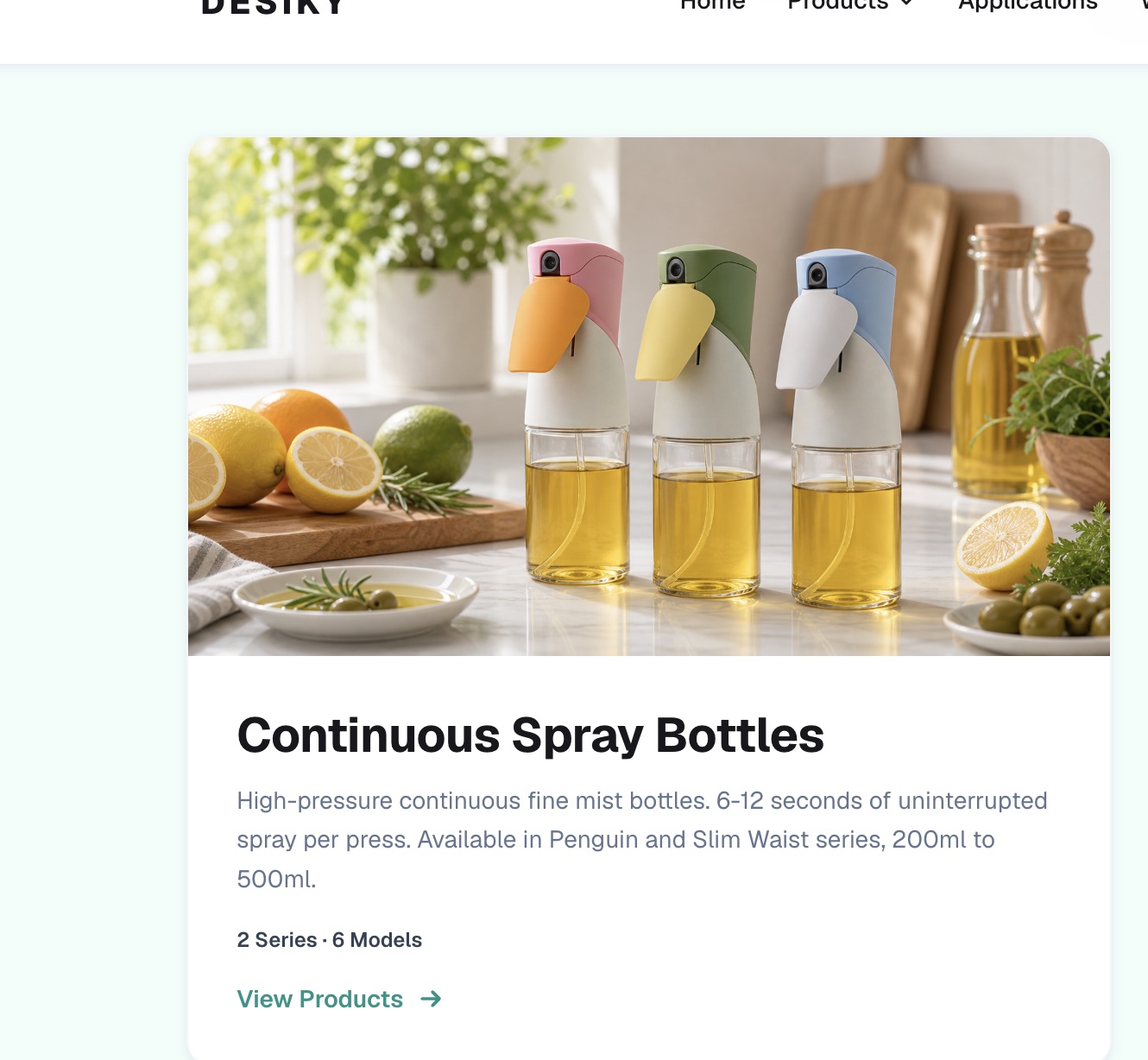
If you are ordering 10,000 spray bottles or more, the process is fundamentally different from buying 1,000. At scale, the decisions you make on mold ownership, QC timing, and shipping method can save — or waste — thousands of dollars per order.
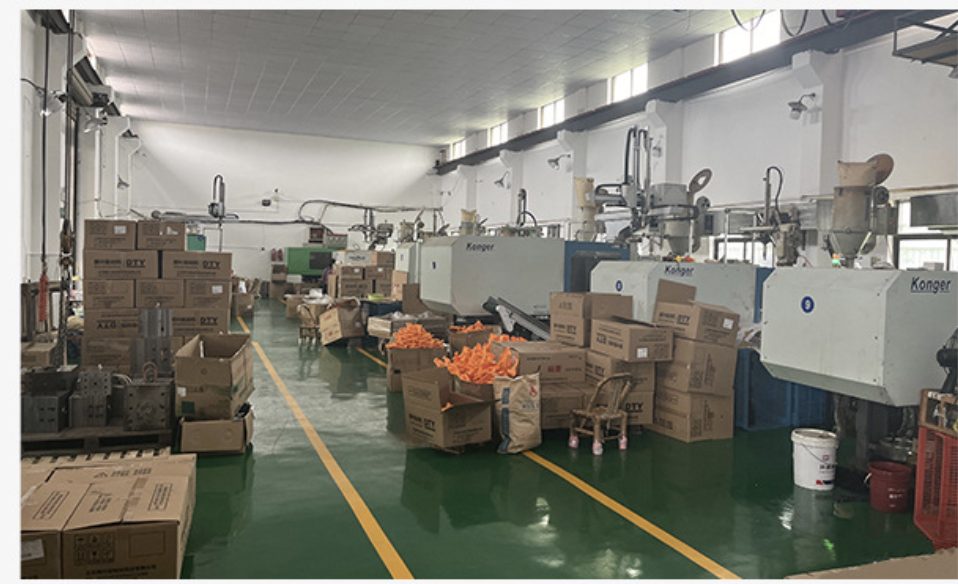
This guide is written from the factory side. We produce 500,000+ spray bottles per month at our facility in Yuyao, China. These are the exact steps and checkpoints we walk our largest distributors through.
Key Takeaways
- At 10,000+ units you unlock full OEM customization: custom molds, Pantone colors, private label packaging.
- Mold cost for a new bottle shape: $3,000-8,000. Amortized over 50,000 units = $0.06-0.16 per bottle. The mold is yours.
- The three QC hold points that prevent container-load disasters: raw material, first article, and pre-shipment.
- A 20-foot container fits 15,000-20,000 bottles (200-500ml). A 40-foot fits 30,000-40,000.
- Payment: 30% deposit + 70% before shipment is standard. Larger accounts negotiate 30/70 with T/T or even LC terms.
Step 1: Define Your Product Specification
Before you contact any factory, write down exactly what you need. Factories respond faster and quote more accurately when the specification is clear. Your spec sheet should include:
- Bottle type: Continuous mist, trigger sprayer, fine mist pump, glass oil sprayer
- Capacity: 200ml, 300ml, 500ml, etc.
- Material: PP, PET, HDPE, or glass (determines tooling and cost)
- Color: Stock color or custom Pantone number
- Branding: Logo printing method, label, packaging requirements
- Quantity: Per SKU per color (not total — factories plan production by individual SKU)
- Destination port: Affects shipping quote and container planning
Step 2: Sample Before You Commit
Always request production samples, not showroom samples. There is a difference. Showroom samples are hand-finished and cherry-picked. Production samples come off the actual mold with the actual material and finish you will receive in bulk.
Test the sample rigorously: fill it with your actual product formula, spray it 500+ times, leave it upside down for 24 hours (leak test), drop it from waist height onto concrete (impact test). If it survives all of that, approve it and keep it as your golden reference sample.
Step 3: Understand Mold Economics
If you are using existing molds (stock bottle shapes), there is no mold cost — you only pay per-unit pricing. This is the fastest path: choose from existing designs and customize with color and printing.
If you need a unique bottle shape, the factory builds a custom mold. Typical costs:
| Mold Type | Cost Range | Lead Time | Lifespan |
|---|---|---|---|
| Simple bottle body | $3,000-5,000 | 25-35 days | 500,000+ shots |
| Complex multi-cavity | $5,000-8,000 | 35-45 days | 500,000+ shots |
| Pump/trigger mechanism | $8,000-15,000 | 45-60 days | 300,000+ shots |
Critical rule: the mold belongs to you. This should be stated in your purchase agreement. If a factory refuses mold ownership transfer, that is a red flag. Your mold stays at the factory for production convenience, but you can request it back or transfer it to another factory at any time.
Step 4: Set Up Three QC Hold Points
The biggest mistake importers make is only inspecting finished goods. By that point, if there is a defect, your entire production run is already done. Instead, set up three checkpoints:
- Raw material check — Verify the resin grade (PP, PET, HDPE) matches your specification before production starts. Ask for the material certificate of analysis (COA).
- First article inspection — After the first 100-200 units come off the line, pull samples. Check dimensions, spray function, color match against your approved sample. This catches tooling drift early.
- Pre-shipment inspection — When production is 100% complete and packed, inspect 200-315 random units per AQL 2.5 standard (for a 10,000 unit order). Check spray function, leak test, print quality, packaging integrity.
You can do inspections yourself, hire a third-party QC company (SGS, Bureau Veritas, QIMA — $200-400 per inspection), or rely on the factory's internal QC if you have an established relationship and trust.
Step 5: Container Loading and Shipping
For 10,000+ units, you will likely ship by sea in a full container load (FCL). Container capacity depends on bottle size:
| Bottle Size | 20ft Container | 40ft Container |
|---|---|---|
| 200ml continuous spray | ~20,000 pcs | ~40,000 pcs |
| 300ml continuous spray | ~18,000 pcs | ~36,000 pcs |
| 500ml continuous spray | ~15,000 pcs | ~30,000 pcs |
| 220ml glass oil sprayer | ~12,000 pcs | ~24,000 pcs |
Shipping from Ningbo port to major destinations: US West Coast 12-15 days, US East Coast 25-30 days, Europe 25-30 days, Latin America 25-35 days, Australia 15-20 days, Middle East 18-22 days.
Step 6: Payment Terms and IP Protection
Standard payment for new customers: 30% deposit via T/T (wire transfer) upon order confirmation, 70% balance before shipment against copy of bill of lading. After 3-5 successful orders, many factories offer 30/70 with the balance payable 30 days after B/L date, or LC (letter of credit) terms for orders above $50,000.
For IP protection: ensure your purchase agreement includes a non-disclosure clause and explicitly states mold ownership. If you are developing a proprietary design, register it in your target markets before sharing detailed drawings with any factory.
Common Mistakes That Cost Importers Money
- Ordering from trading companies thinking they are factories. Ask for a factory video tour. If they cannot show injection molding machines and assembly lines, they are a middleman adding 15-30%.
- Skipping the sample step. A $50 sample order that takes one week can prevent a $15,000 container of defective product.
- Not specifying color with Pantone codes. Saying "blue" gets you whatever blue the factory decides. Saying "Pantone 2935 C" gets you exactly the blue you want, every time.
- Inspecting only the top layer of cartons. Some factories pack better-quality units on top. Always pull samples from the middle and bottom of pallets.
- Ignoring landed cost. FOB price is not your real cost. Add freight, customs duty, clearance fees, and inland delivery. A $0.50 FOB bottle often costs $0.70-0.85 landed in the US.